
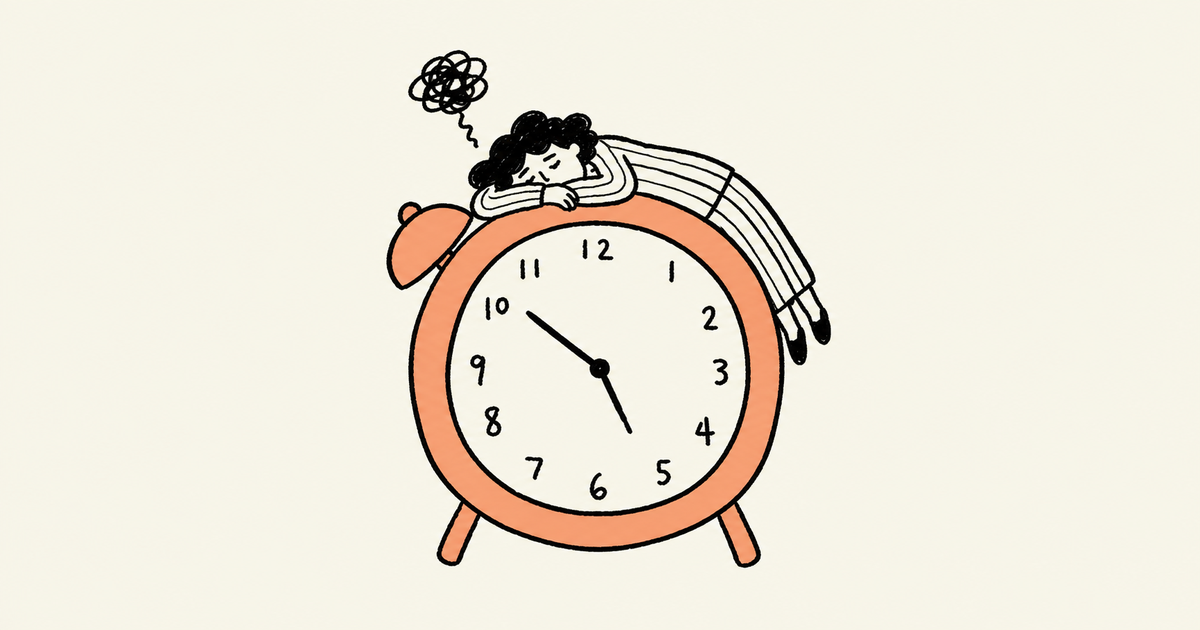
Why procrastination is more than poor time management
You know the deadline. You have made a plan. The task is sitting in front of you—and you still do not begin.
This is why procrastination cannot always be explained by a missing calendar or a badly written to-do list. In research, procrastination is usually treated as an unnecessary delay of an intended action even though the person expects the delay to make things worse. The important part is the gap between what you intend to do and what you actually do.
Time-management tools can help organise a task. They do not automatically change the anxiety, boredom, uncertainty or self-doubt that appears when it is time to start.
Knowing when to work is different from being able to face how the work feels.
What emotion regulation actually means
Emotion regulation is the way we influence which emotions arise, how strongly we feel them, how long they last and what we do in response.
Some strategies are deliberate, such as taking a slow breath before a difficult conversation. Others are fast and almost automatic, such as opening another tab when a task makes you feel exposed or unsure.
From this perspective, procrastination may be less about choosing to waste time and more about choosing immediate emotional relief. The person is not necessarily avoiding the task itself. They may be avoiding the feeling that arrives with the task.
Change the feeling now; leave the task for later.
The short-term relief loop
Imagine that you need to write a report. The moment you open the document, you feel anxious: What if it is not good enough? You check your phone instead. The anxiety drops slightly. That relief matters.
Your brain has learned that delay can remove discomfort quickly. The report is still there, but for a few minutes you feel better. Later, the deadline is closer, the task feels larger and guilt joins the original anxiety. The next time you approach the report, there is even more discomfort to escape.
This creates a loop:
The relief is real. It is simply expensive.
What the research says
Sirois and Pychyl proposed that procrastination can prioritise short-term mood regulation over the wellbeing of the future self. The idea helps explain why a person may choose relief now even while understanding the later consequences.
Experimental and intervention work also suggests that emotion-regulation skills matter. A 2016 study found that strengthening the ability to tolerate and modify unpleasant emotions was linked with reduced procrastination.
At the same time, the broader evidence does not reduce procrastination to emotion alone. Steel's major meta-analytic review identified task aversiveness, low confidence in success, impulsiveness, distractibility and delayed rewards among important predictors. Emotion regulation is therefore a strong lens, but it sits inside a larger self-regulation and motivation system.
The most accurate answer is not “procrastination is only emotional.” It is “emotion often helps explain why delay feels rewarding right now.”
What the emotion-regulation model explains—and what it does not
WHAT IT HELPS EXPLAIN
- Why delay can feel relieving even when it creates future stress.
- Why fear of failure, boredom, frustration, shame or uncertainty can make starting harder.
- Why guilt may feed another round of avoidance.
- Why harsher self-criticism does not reliably solve the problem.
WHAT IT DOES NOT EXPLAIN ALONE
- Unclear instructions, missing information or unrealistic workloads.
- Sleep loss, exhaustion, competing responsibilities or environmental barriers.
- Attention and executive-function difficulties.
- Strategic delay, where waiting is a reasonable decision rather than procrastination.
Which emotions tend to trigger delay?
Anxiety: The task may involve evaluation, uncertainty or the possibility of failure.
Boredom: The work feels under-stimulating, repetitive or too distant from anything meaningful.
Frustration: You do not know the next step, or progress feels slower than expected.
Resentment: The task feels imposed, controlling or disconnected from your own priorities.
Shame and self-doubt: Starting may feel like a test of your ability or worth.
Overwhelm: The task is represented as one large demand instead of a sequence of visible actions.
Different emotions call for different responses. A smaller first step may help with overwhelm. More information may help with uncertainty. Permission to make an imperfect first draft may help with fear of evaluation.
Why this explanation is useful
The emotion-regulation view changes the question from “Why am I so lazy?” to “What is happening at the moment I turn away?”
That is a more useful question because it points toward something observable: the trigger, the feeling, the escape behaviour and the immediate reward. Once you can see the sequence, you can change one part of it.
It also reduces the temptation to use shame as fuel. Shame may occasionally produce a last-minute burst of action, but it can also make the task feel more threatening. Understanding the loop does not excuse missed commitments. It gives you a clearer place to intervene.
Why it is not the only explanation
Two people can delay the same task for different reasons. One may be anxious about being judged. Another may not understand the instructions. A third may be exhausted, distracted by a noisy environment or unconvinced that the outcome is worth the effort.
Motivation research also points to confidence, value, impulsiveness and the timing of rewards. A distant benefit often competes poorly with an immediate distraction. Task structure matters too: vague goals create more decisions at the exact moment action is required.
This is why a single solution—better scheduling, more discipline or emotional coping—will not work for every delay. The best response depends on the mechanism operating in that moment.
MY HEART ROOM — NAME IT, THEN SHRINK IT
- NOTICE: “I am moving away from the task.”
- NAME: “The feeling is anxiety / boredom / uncertainty.”
- SHRINK: “The first visible move is to open the file and write one rough line.”
- BEGIN: Work for five minutes, then choose again.
What to do when you notice the loop
1. Name the immediate emotion. Be specific. “Bad” is harder to work with than “uncertain,” “bored,” “afraid of being judged” or “resentful.”
2. Reduce the emotional cost of entry. Give yourself permission to produce a rough first pass. Find one missing piece of information. Move the task into a quieter environment. The aim is to lower unnecessary threat, not wait for perfect comfort.
3. Convert the task into a visible action. “Work on the presentation” is still a category. “Open the deck and write three possible titles” is an action.
4. Use an if–then start plan. Choose a concrete cue and response: “If I finish lunch, then I will open the document and work on the first paragraph for five minutes.” Implementation-intention research suggests that specific cue–action plans can help translate intentions into behaviour.
5. Separate starting from finishing. Your first commitment can be to begin, not to complete everything. After the first five minutes, make a new decision using the information you have then.
Important nuance
Not every delay is procrastination. Waiting can be strategic when you need more information, recovery, consent, resources or a better sequence of work.
Persistent procrastination can also occur alongside stress, low mood, anxiety, ADHD-related executive-function difficulties, poor sleep or other pressures. The behaviour alone cannot identify a cause. If delay is repeatedly disrupting work, study, relationships or daily functioning, a qualified professional can help you explore what is contributing.
Learn the psychology
Procrastination · Emotion regulation · Avoidance · Mood repair
Task aversiveness · Self-efficacy · Self-regulation · Implementation intentions
References
- Sirois, F. M., & Pychyl, T. A. (2013). Procrastination and the priority of short-term mood regulation: Consequences for future self. Social and Personality Psychology Compass, 7(2), 115–127. ↗ Social and Personality Psychology Compass.
- Eckert, M., Ebert, D. D., Lehr, D., Sieland, B., & Berking, M. (2016). Overcome procrastination: Enhancing emotion regulation skills reduce procrastination. Learning and Individual Differences, 52, 10–18. ↗ Learning and Individual Differences.
- Steel, P. (2007). The nature of procrastination: A meta-analytic and theoretical review of quintessential self-regulatory failure. Psychological Bulletin, 133(1), 65–94. ↗ Psychological Bulletin.
- Tice, D. M., & Baumeister, R. F. (1997). Longitudinal study of procrastination, performance, stress, and health: The costs and benefits of dawdling. Psychological Science, 8(6), 454–458. ↗ Psychological Science.
- Gollwitzer, P. M., & Sheeran, P. (2006). Implementation intentions and goal achievement: A meta-analysis of effects and processes. Advances in Experimental Social Psychology, 38, 69–119. ↗ Advances in Experimental Social Psychology.